A school site is one of the more demanding environments a fence will ever be asked to work in. It has to hold up to hundreds of children every day, resist the wear of balls, bikes, and bodies, stay safe for the youngest users, and meet the expectations of parents, neighbours, and district risk managers at the same time.
It also has to be planned, funded, and procured through a public-sector process that looks quite different from a private residential job. Understanding that process, and the fencing applications it typically covers, makes it far easier to scope a project properly, get comparable quotes, and avoid the most common mistakes.
This guide is a practical overview for anyone in a BC school district or school community who is responsible for a fencing decision.
The Four Fencing Jobs on a School Site
Most school fencing questions fall into one of four categories. They have different purposes, different heights, and sometimes different materials, so it helps to separate them at the planning stage.
Perimeter fencing. Perimeter fencing defines the school site and manages how people and vehicles enter it. Its purpose is usually safety rather than total security: keeping young children away from a busy road next to an active play area, restricting unauthorized access from areas with heavy foot traffic, or separating the site from a hazard that cannot be removed, such as a steep ravine edge or a heavily wooded boundary. Surrey School District’s fencing procedure, for example, describes perimeter fencing as generally six feet high, chain link fabric on a steel structure, installed to district specifications and placed on district property lines.
Playground enclosures. Elementary schools in particular often need a defined boundary around primary play areas. The goal is to keep younger students contained within sight of supervising staff and to keep balls, bikes, and unwanted visitors out. Playground equipment itself is governed by CSA Z614, so fence placement needs to be coordinated with equipment locations, fall zones, and surfacing rather than treated as a separate decision.
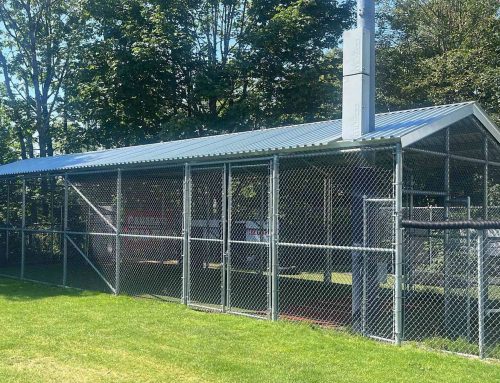
Field and court enclosures. Baseball diamonds, soccer fields, tennis and basketball courts, and increasingly pickleball courts each have their own containment requirements. Backstops, ball-stop fencing, and athletic netting protect neighbouring properties, roads, parking lots, and other play areas from stray balls. These are specialized installations, and the specification depends on the sport, the ball, and what sits behind the field.
Service and utility enclosures. Garbage and recycling enclosures, mechanical equipment screening, portable classroom perimeters, and storage compounds all need fencing that is functional, durable, and often screened for appearance.
What a Typical District Specification Looks Like
Every district writes its own standards, but there are common threads across BC school fencing specifications.
Height. Perimeter and playground fencing is commonly specified at around 1.8 metres (6 feet). Sports field and court fencing is taller where ball containment is the priority. Pickleball Canada, for instance, recommends 3.0 to 3.7 metres for outdoor pickleball court perimeters, and backstops and ball-stop fences on diamonds often run higher still.
Material. Chain link remains the dominant school fencing material because it is durable, economical, visible through (which supports supervision), and easy to repair in sections. Galvanized steel chain link on galvanized steel posts is the standard baseline. Black or green vinyl-coated chain link is a common choice where a district or community wants a less institutional appearance, and it is also worth considering on coastal or high-moisture sites. Ornamental steel is sometimes specified at front entrances and high-visibility frontages where appearance matters more than cost per metre.
Gauge and post specification. School fencing takes more abuse than most residential or light commercial fencing. A heavier fabric gauge, appropriate post diameters, and properly sized concrete footings make a real difference in how long the fence stays straight and tight. Districts that specify to a minimum standard are protecting themselves against the false economy of a lighter product that needs repair in three years.
Finishing details. Fence tops and bottoms matter on school sites. Knuckled (rolled) tops rather than cut barbs on the top of chain link reduce the risk of cuts and snagging, and tight bottom detailing prevents gaps small children can crawl through and larger gaps that invite unwanted access.
How School Fencing Projects Are Commonly Funded
School fencing is usually funded through district capital and maintenance budgets, which draw on Ministry of Education and Child Care programs. Knowing which one applies helps you time a request and build a credible project case.
Annual Facility Grant (AFG). The AFG is a yearly grant from the Ministry to school districts for recurring projects that keep buildings and sites in good condition. Eligible spending includes site upgrades, and the Ministry specifically lists perimeter safety fencing within that category, along with playground repairs and replacements and repairs to paved play areas. For many districts, the AFG is the most direct source for replacing aging or damaged fencing.
Playground Equipment Program (PEP). This program supports new playgrounds at elementary schools and the replacement of aging equipment that poses a health or safety hazard. Equipment must be universal in design and meet CSA Z614. Fencing is not the program’s focus, but a playground project is the natural moment to review the surrounding enclosure.
District capital plans and new builds. For new schools and major additions, fencing is typically scoped within the overall construction budget, often through the general contractor or as a separate site package.
Cost-sharing arrangements. Some districts have procedures for cost-sharing where neighbours request additional fencing. Surrey’s procedure, for example, allows the district to pay half the cost where a majority of adjacent property owners agree to fund the other half.
Funding programs and eligibility rules change, so always confirm the current rules with your district’s facilities or capital planning department before building a project case around any one program.
Gates and Access: The Detail That Causes the Most Problems
Gate planning is where many school fencing projects succeed or fail. A fence that looks right on a site plan but does not work for the people who use the site becomes a daily frustration.
Pedestrian gates. Locate student and parent gates where supervision is practical and where desire lines already exist. Fencing that blocks natural walking routes gets bypassed, which defeats its purpose.
Vehicle and service gates. Maintenance crews, grounds equipment, delivery trucks, and waste collection all need access. Gate widths and swing clearances should be sized for the largest vehicle that needs to enter, not the average one.
Emergency access. Fire and emergency services need reliable access to the site and to key points on it. Gate locations, widths, and locking arrangements should be coordinated with the district’s emergency planning and with local fire services before the design is finalized.
Hardware. Gate hardware on a school site is used heavily and sometimes abused. Heavy-duty hinges, positive latching, and lockable hardware that staff can operate easily are worth specifying, and so is hardware that resists tampering. For gates serving playground areas, self-closing and self-latching hardware helps ensure the gate is not left open.
Future automation. If there is any chance the district will want controlled or automated access in future, such as at a staff parking lot, planning conduit and gate structure now is far less expensive than retrofitting later.
Planning Around the School Calendar
Timing is a practical constraint on school fencing work. Installing a fence on an operating school site means managing noise, worker safety, material staging, and the movement of students through or near the work area.
Many districts prefer to schedule significant fencing work during summer break, spring break, or winter break, when the site is empty or lightly used. Summer is the most common window, which also means contractors are at their busiest and lead times lengthen. Districts that begin scoping and tendering in winter or early spring tend to get better scheduling and pricing than those that tender in June.
For work that has to happen while school is in session, a good contractor will plan staging areas, temporary barriers, and work hours to keep students and staff separated from the work zone, and will coordinate the schedule with the principal and facilities staff.
What to Look for in a School Fencing Contractor
Public-sector procurement is designed to compare like with like, but the lowest bid is not always the lowest cost over the life of the fence. These are the questions worth putting to any contractor bidding on school work.
Safety certification. COR (Certificate of Recognition) certification demonstrates that a contractor has an audited occupational health and safety management system. For work on or near an active school site, it is a meaningful indicator of how a crew will manage site safety, and many public-sector owners ask for it or give it weight in evaluation.
Relevant experience. Ask for completed projects of a similar type: schools, municipal parks, athletic facilities, institutional sites. A contractor who has worked on public-sector projects understands the documentation, insurance, and scheduling expectations that come with them.
Dedicated project management. A named project manager who coordinates with facilities staff, schedules around the school calendar, and handles issues as they arise is far more valuable than a contractor who simply sends a crew.
In-house fabrication. Schools frequently need gates, panels, and enclosures sized to unusual site conditions. A contractor with its own fabrication shop can build to those dimensions and make adjustments quickly.
Warranty. A written parts and labour warranty shows a contractor stands behind its installation. Make sure the term and scope are clear before you award.
Clear scope and pricing. The best quotes itemize fence type, height, fabric gauge, post specification, footing details, gates, hardware, and removal or disposal of old fencing, so that you can compare bids line by line.
School Projects We Have Completed
Raybern Erectors has delivered fencing and railing work for schools across the Lower Mainland. A few examples show the range of what school sites need.
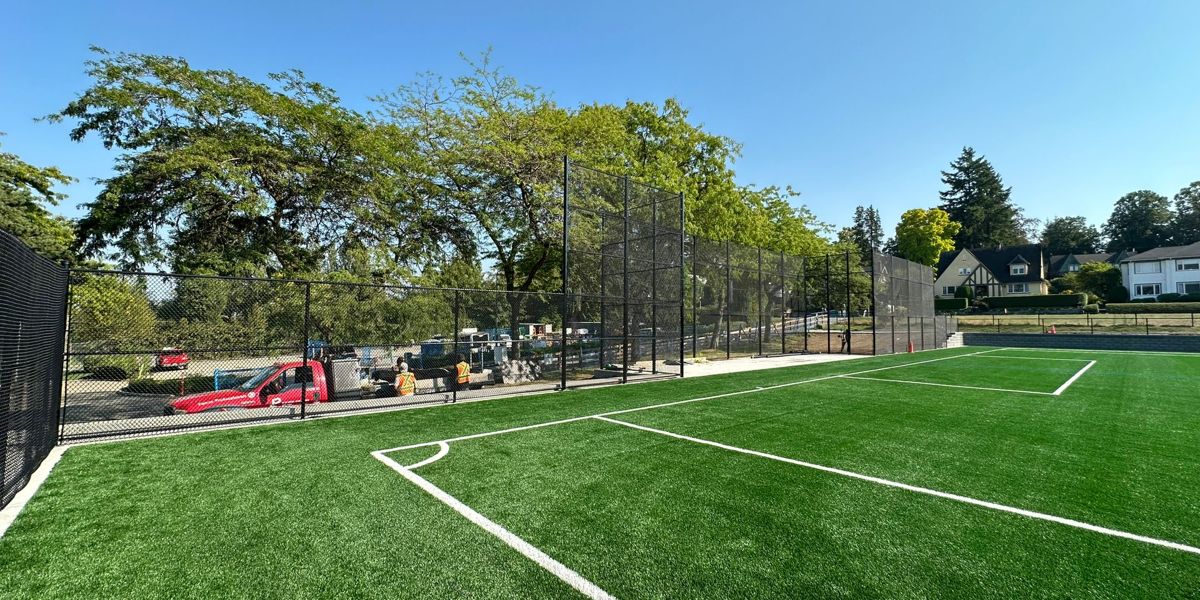
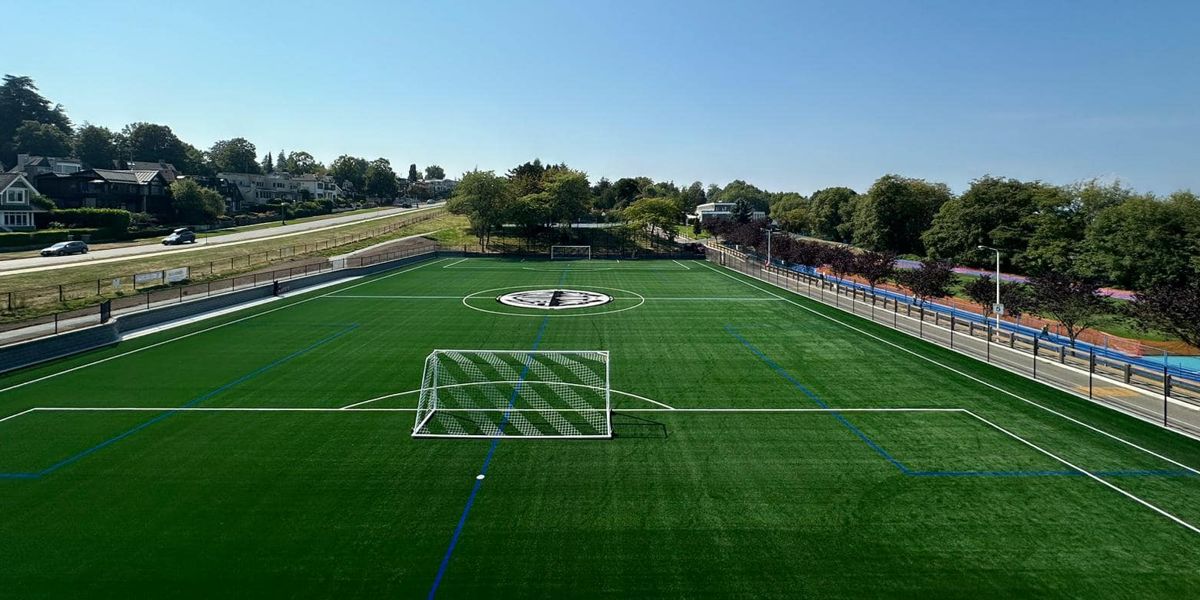
West Point Grey Academy, Vancouver. We installed perimeter chain link fencing and swing gates around a new sports field that is part of a larger build including a running track. The tallest sections stand nearly 20 feet high, which called for heavier posts, roughly 6-5/8 inches in diameter. The project used black vinyl-coated chain link mesh with powder-coated black posts, a good example of the aesthetic finish many schools and communities prefer. We worked alongside Heatherbrae on project management and Wilco on civil work.
Hazel Trembath Elementary, Coquitlam. After a fire damaged Hazel Trembath Elementary, the community moved quickly to establish a temporary school site so students could keep learning. We installed chain link fencing and handrails to help convert the facility into a functioning school, a project where speed and reliable site safety mattered as much as the fence itself.
Alderson Elementary, Coquitlam. We custom fabricated a stair railing in our own shop from 1-7/8 inch galvanized steel pipe, welded together with a bullnose finish on each end for a smooth, safe termination at the school.
Why Raybern Erectors for School and Institutional Fencing
Raybern Erectors has been installing fencing across Vancouver and the Lower Mainland since 1964, with a client base that includes municipalities, institutions, and commercial and industrial owners alongside residential customers. Our crews are COR certified, every project is managed by a dedicated project manager, and our in-house fabrication shop lets us build custom gates, panels, and enclosures to the dimensions your site actually requires. We also install the specialized fencing that school sites often need, including backstops, ball-stop fencing, athletic netting, and court enclosures. Every installation is backed by a 1-year parts and labour warranty.
If you are a facilities manager, capital planner, or school administrator scoping a fencing project, we welcome the opportunity to walk your site, discuss options, and provide a clear, itemized estimate.
Frequently Asked Questions (FAQs)
Heights are set by each district, but around 1.8 metres (6 feet) is a common specification for perimeter and playground fencing. Sports fields and courts typically need taller fencing for ball containment. Always follow your district’s own specification.
Galvanized chain link on steel posts is the most common because it is durable, economical, allows supervision through the fence, and is easy to repair. Black or green vinyl-coated chain link and ornamental steel are used where appearance is a priority.
The Ministry of Education and Child Care lists perimeter safety fencing as an eligible site upgrade under the Annual Facility Grant. Confirm current eligibility and priorities with your district’s facilities department.
Summer break is the most common window because the site is empty, but it is also the busiest time for contractors. Planning and tendering in winter or early spring usually secures better scheduling. Winter and spring breaks can suit smaller projects.
Yes. Playground equipment must meet CSA Z614, and fence lines need to respect equipment locations, fall zones, and surfacing. Planning both together avoids conflicts and rework.
For gates serving playground and younger-student areas, self-closing and self-latching hardware helps keep the enclosure secure. Emergency access requirements should be reviewed with local fire services before the gate design is finalized.
Yes. We install backstops, ball-stop fencing, court enclosures, and custom athletic netting for school and municipal athletic facilities. At West Point Grey Academy in Vancouver, for example, we fenced a new sports field with chain link reaching nearly 20 feet at its tallest point.
Yes. Our in-house shop fabricated a custom galvanized steel stair railing for Alderson Elementary in Coquitlam, and we installed handrails as part of the Hazel Trembath Elementary project.
Note: This article is general guidance. School fencing specifications, funding programs, and procurement rules vary by district and change over time. Always confirm current requirements with your school district’s facilities or capital planning department and the Ministry of Education and Child Care.
Raybern Erectors has been installing fencing for institutions, municipalities, and businesses across Vancouver and the Lower Mainland since 1964. Contact us today for a free, no-obligation consultation and estimate.
Related Posts