Most homeowners approach hiring a fencing contractor the same way they approach most trades: get a few quotes, go with the lowest, hope for the best. Sometimes that works. Sometimes it produces a fence that looks fine on install day and starts showing problems within a year or two, at which point the contractor is nowhere to be found.
Fencing is not a glamorous purchase but it is a durable one. A fence installed correctly by a knowledgeable, professional contractor will serve your property for fifteen to twenty-five years depending on the material. A fence installed poorly will cause problems long before that, and the cost of fixing those problems, whether in repairs, early replacement, or a bylaw dispute with a neighbour, will exceed whatever you saved on the original quote.
The questions below are designed to help you tell the difference before you hire. These are the questions a well-informed buyer should ask any fencing contractor in Vancouver, Burnaby, Surrey, Port Moody, or anywhere across the Lower Mainland. We have framed what a good answer looks like for each one, drawing on sixty years of professional fencing experience.
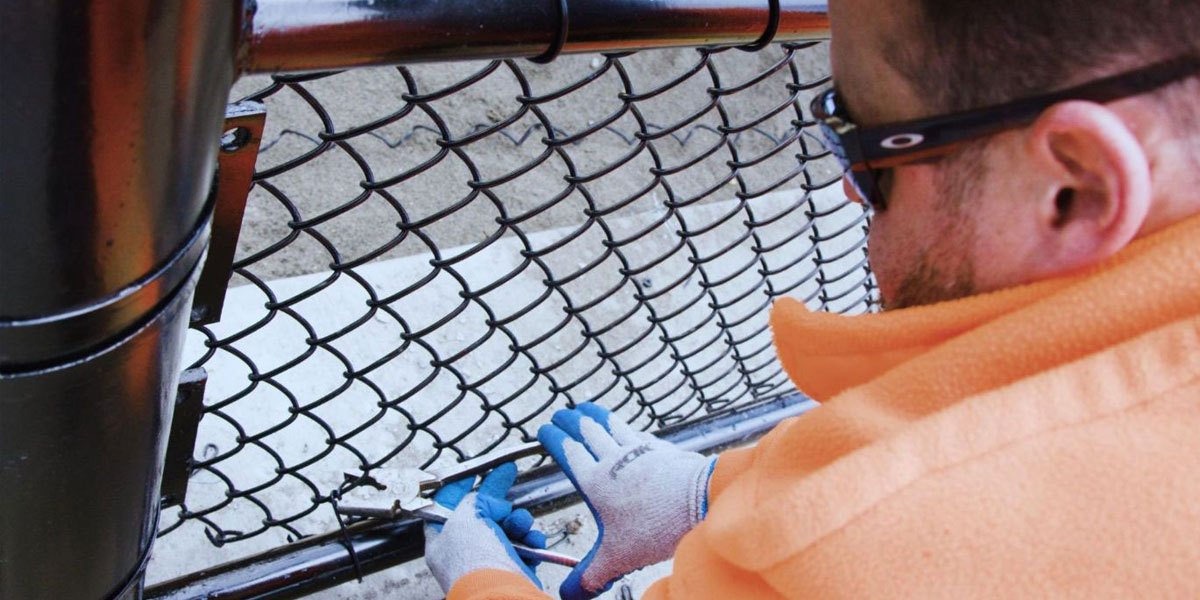
1. Are You COR Certified?
COR stands for Certificate of Recognition, and it is a voluntary safety certification administered through BC’s construction industry that recognizes companies with comprehensive, audited occupational health and safety management systems. It is not required for a fencing contractor to operate, which is exactly why asking about it tells you something meaningful.
A contractor who holds COR certification has built and maintains a formal safety program, undergone third-party auditing, and committed to a standard of site management that goes beyond the minimum required by WorkSafeBC. That discipline shows up not just in safety outcomes but in how the crew approaches every aspect of a job: site preparation, daily work practices, and the professionalism of the finished installation.
A good answer sounds like: “Yes, we are COR certified, and we maintain that certification through regular internal and third-party audits.”
A concerning answer sounds like: “What’s COR?” or “We follow all the standard safety rules.”
For municipal, commercial, and institutional projects, COR certification is often a requirement to be considered for the contract at all. Even for residential projects, working with a COR-certified contractor is a meaningful indicator of overall professionalism and seriousness.
2. Do You Have a Dedicated Project Manager for My Job?
This question reveals more about a contractor’s actual capacity and operational structure than almost any other. Many fencing companies, particularly smaller owner-operators, wear many hats simultaneously. The person who quotes your job may also be the person managing the schedule, sourcing materials, running the crew, and responding to your calls when something needs to be addressed.
That is not necessarily a problem for a small, straightforward residential job. But on any installation of meaningful scale, or on a commercial or municipal project with real timeline and coordination requirements, the absence of a dedicated project manager creates a single point of failure. When the owner is pulled in multiple directions, your project gets less attention, communication slows down, and problems that should be caught early get missed.
A good answer sounds like: “You will have a dedicated project manager assigned to your job who will be your primary point of contact from the first site visit through to completion.”
A concerning answer sounds like: “You can try to reach me on my cell” from the owner of a company that also appears to be running multiple large jobs simultaneously.
3. Do You Fabricate Custom Components In-House?
For standard residential chain link or vinyl fence installations, this question matters less than it does for projects involving custom gates, ornamental fencing, handrails, player shelters, or any component that needs to be built to specific dimensions.
When a fencing contractor fabricates custom components in-house, they control the quality, the dimensions, and the timeline entirely. They can accommodate a non-standard opening, a gate that needs to open in an unusual direction, or a component that simply does not exist as a catalogue product. They can also respond quickly if something needs to be adjusted during installation without waiting for a third party to remake a part.
When a contractor outsources fabrication, those advantages go away. Lead times lengthen, specification errors may not be caught until the part arrives on site, and quality control depends on someone the contractor does not directly employ.
A good answer sounds like: “We have an in-house fabrication shop and build all of our custom gates, handrails, and specialty components ourselves.”
A concerning answer sounds like: “We order gates through our supplier” for a project that requires custom dimensions.
4. What Warranty Do You Provide on Your Work?
Warranty terms are one of the clearest signals of how confident a contractor is in the quality of their own installation. A contractor who offers no warranty, or whose warranty requires so many conditions to activate that it functionally does not exist, is telling you something about how they expect their own work to hold up.
The warranty you want covers both parts and labour. A warranty that covers parts but not labour means you still pay for a crew to come back if something goes wrong due to a workmanship issue. A warranty that is described in vague terms like “we stand behind our work” without a defined time period or scope is not a warranty so much as a general statement of intent.
A good answer sounds like: “We provide a one-year parts and labour warranty on every installation. If you notice any deficiency within that period, we will come back and make it right at no cost to you.”
A concerning answer sounds like: “If something goes wrong we’ll take care of it” with no defined timeframe or any written documentation of the terms.
5. Can You Provide References or Examples of Similar Projects?
This question is about relevance, not just credibility. A long list of happy residential customers is meaningful if you are getting a residential fence. It is less meaningful if you are a municipality or school board procuring a sports field installation and the contractor cannot point to a single comparable project in their portfolio.
Ask specifically for references or project examples that resemble what you are trying to build, whether that is residential chain link in your neighbourhood, a commercial perimeter installation, a sports field backstop, or a soundproof barrier along a busy road. The right contractor should be able to point to completed projects without hesitation and, ideally, provide a client contact you can speak with directly.
A good answer sounds like: “Here are three projects similar to yours, here are photos, and here is a contact at the municipality who can speak to our work on their sports field.”
A concerning answer sounds like: “We have done lots of jobs like this” with no specifics, no photos, and no references offered.
6. How Do You Handle Unexpected Site Conditions?
No site assessment, however thorough, eliminates the possibility of encountering something unexpected once posts start going in. Rocky soil below the surface, utilities closer to the fence line than anticipated, or a property line that does not match where the existing fence sits are all real situations that come up on real projects. How a contractor handles these moments reveals a great deal about their professionalism and communication standards.
What you want is a contractor who identifies unexpected conditions, communicates them to you immediately, explains the implications and the options, and agrees on a path forward before proceeding. What you do not want is a contractor who makes unilateral decisions about how to proceed, absorbs the problem silently and does a workaround that compromises the installation, or presents you with a surprise additional charge at the end of the job.
A good answer sounds like: “If we encounter something unexpected on site that will affect the scope or cost, we stop, communicate it to you immediately, and agree on how to proceed before we continue.”
A concerning answer sounds like: “We deal with whatever comes up” without explaining how or whether you would be consulted.
7. Are You Familiar with the Local Bylaws That Apply to My Property?
A professional fencing contractor working in Vancouver and the Lower Mainland should have a working knowledge of the fence height limits, setback requirements, and permit thresholds that apply in the municipalities where they regularly work. They will not be your legal advisor or pull your permit on your behalf, but they should be able to flag the situations that typically require closer attention before you commit to a design.
Front yard height limits, corner lot visibility triangles, the interaction between retaining walls and permitted fence height, and the permit requirements for overheight installations are all things a knowledgeable contractor should be able to discuss confidently. If a contractor proposes a design that would clearly violate local bylaws without flagging it, that is a meaningful credibility problem.
A good answer sounds like: “In the City of Vancouver, front yard fences are limited to 1.2 metres and rear and side yard fences generally go to 1.83 metres. Your project looks straightforward for those limits, but here is one thing worth confirming with the City given your lot configuration.”
A concerning answer sounds like: “I think you can build pretty much whatever you want” or a blank stare when you mention the bylaw.
8. What Materials and Suppliers Do You Use?
The durability and longevity of your fence is only as good as the materials it is built from. A contractor who cannot or will not name their material suppliers, or who responds vaguely to questions about wire gauge, post specifications, or product brands, is not necessarily hiding something, but the vagueness itself is a data point worth noting.
Reputable contractors are generally proud of their material sources and happy to discuss them, because the quality of their materials is part of what justifies their price. If a contractor is reluctant to get specific, it may be because the specifications are lower than what a competing quote is offering at a similar price point.
For specialty products, ask specifically. A contractor who installs cedar split rail should be able to tell you where their cedar comes from. A contractor who installs acoustic barrier fencing should know their Acoustifence from their Echotrol and be able to explain the difference. A contractor who installs ornamental fencing should be able to name the suppliers they source from.
A good answer sounds like: “Our cedar split rail comes from Idaho Cedar Sales, our bollards come through Reliance Foundry, and our acoustic products are Acoustifence and Echotrol depending on the application.”
A concerning answer sounds like: “We use good quality materials from reputable suppliers” with no specifics offered when you press.
9. What Does the Payment and Scheduling Process Look Like?
This question is about operational transparency and realistic expectations rather than red flags. A professional fencing contractor should be able to give you a clear picture of their typical scheduling timeline, how they communicate during the project, what the payment terms are, and what the process is if something needs to be addressed after completion.
Payment terms that require full payment before work begins are unusual and worth questioning. A standard professional arrangement involves a deposit at the time of signing with the balance due on completion. Contractors who pressure for full upfront payment before they have mobilized or started work are an industry-wide red flag regardless of how confident the salesperson seems.
On scheduling, the honest answer in a busy market may be that the wait time for a quality contractor is longer than you hoped. That is a better answer than a vague commitment that gets pushed repeatedly once you have paid a deposit.
A good answer sounds like: “We require a deposit at signing and the balance on completion. Our current schedule is running approximately X weeks, and your project manager will confirm the installation date a week in advance.”
A concerning answer sounds like: “We can start whenever you want” from a contractor who also claims to have a full crew and multiple active projects, or a request for full payment before the first post goes in.
What These Questions Tell You Collectively
No single answer to any of these questions is a guaranteed indicator of a good or bad contractor. What these questions do, taken together, is build a picture of how a contractor actually operates: whether they have genuine structure behind their business or are winging it, whether they are transparent about their limitations and their process, and whether they take the job and your property seriously.
A contractor who answers all ten of these questions confidently, specifically, and without becoming defensive is telling you something meaningful about how they will show up for your project. A contractor who deflects, becomes vague, or answers in generalities is also telling you something.
At Raybern Erectors, we are happy to answer every one of these questions directly. We are COR certified. We assign dedicated project managers to every job. We fabricate custom components in our own shop. We back every installation with a one-year parts and labour warranty. We use named, reputable suppliers for all of our key products. And we have sixty years of completed projects across Vancouver and the Lower Mainland to point to when you ask for examples of work like yours.
Contact us today for a free consultation and estimate.
Frequently Asked Questions (FAQs)
A standard residential fence installation generally takes one to three days once the project is scheduled. Commercial and municipal projects vary considerably depending on scope. Wait times from quote to installation depend on the contractor’s current workload. In peak season in the Lower Mainland, quality contractors often have scheduling windows of several weeks. This is worth asking about during your consultation so you can plan accordingly.
A solid warranty covers both parts and labour for a defined period, typically one year as a minimum for a professional installation. It should be in writing, define what constitutes a covered deficiency, and commit the contractor to returning to the site to make it right at no additional cost within the warranty period. Verbal commitments to “stand behind the work” without a written warranty are not enforceable.
For commercial, municipal, and institutional projects, COR certification is often a procurement requirement rather than a choice. For residential projects, the value is in what COR certification signals about the contractor’s overall operational discipline and safety culture. A contractor who has built and maintains a formal safety management system tends to bring that same discipline to the quality of their installations and their client communication. It is a meaningful differentiator, not a marketing credential.
Not without understanding why they are cheapest. A lower quote sometimes reflects genuine operational efficiency. It sometimes reflects lighter material specifications, a lower gauge wire, thinner posts, or less concrete than the job requires. It sometimes reflects a contractor who will not be easy to reach if something goes wrong after installation. Understand what is behind the number before you decide.
The most consistent red flags are requests for full payment before work begins, vague or non-existent warranty terms, inability to name material suppliers or specify gauge and post dimensions, no mention of COR certification or WorkSafeBC compliance, and difficulty providing references for comparable projects.
For a standard residential fence, two to three quotes from reputable local contractors is generally sufficient to establish a fair market range. For larger commercial or municipal projects, a more formal procurement process with a defined scope of work distributed to multiple contractors produces more comparable quotes. Avoid letting the lowest quote drive your decision without understanding what specification differences account for the price gap.
Start with a referral from a neighbour, colleague, or property manager who has had recent fencing work done. Check Google reviews and look for contractors with a consistent track record of responses to both positive and negative reviews. Ask specifically about COR certification, warranty terms, and project management structure before requesting a quote.
Raybern Erectors has been building fences across Vancouver and the Lower Mainland since 1964. Contact us today for a free, no-obligation consultation and estimate on your fencing project.
Related Posts