If you are considering a sound barrier fence for your property, you have probably already encountered a wide range of claims about how much noise reduction to expect. Some manufacturers advertise numbers in the 25 to 40 decibel range. Others talk in vaguer terms about “significant” or “dramatic” noise reduction without committing to a figure at all. It is genuinely confusing to sort through, and the honest answer is more nuanced than any single number on a product spec sheet.
This article breaks down what actually happens when sound meets a barrier fence, what realistic decibel reduction looks like in a real backyard or commercial property rather than a laboratory, and what factors will determine whether you land at the low end or high end of that range. The goal is to help you set accurate expectations before you invest in a noise barrier fence, not to oversell what any fence, including ours, can actually deliver.
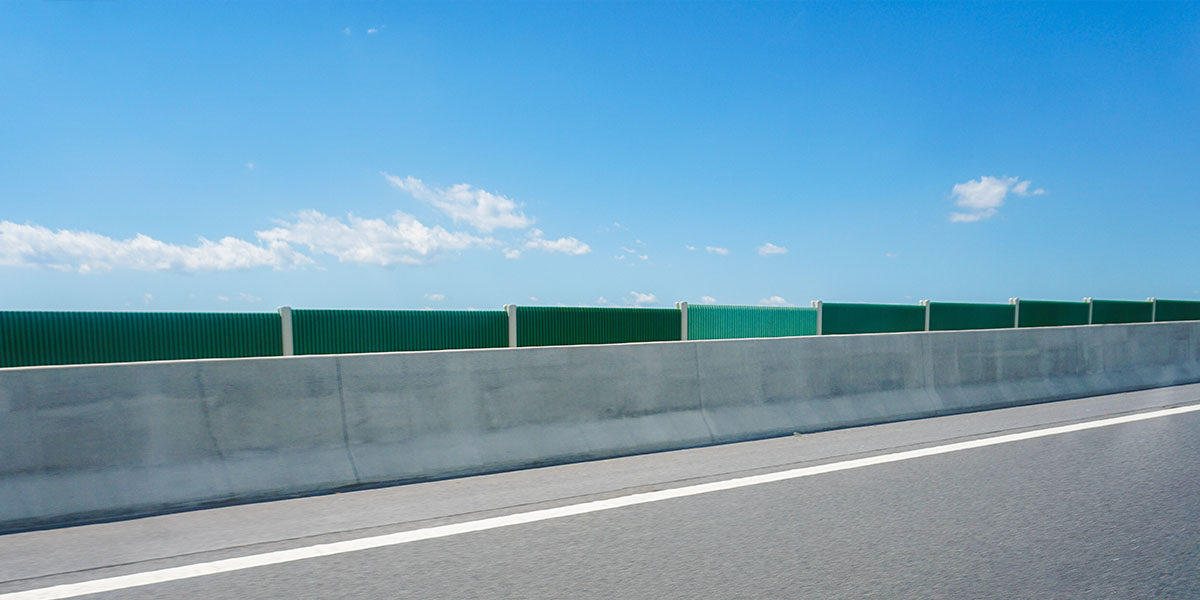
There Is No Such Thing as a Truly Soundproof Fence
Before getting into numbers, it is worth being direct about something the industry does not always communicate clearly: no fence makes a property silent. The term “soundproof fence” is commonly used, including by us, but it describes a category of product rather than a literal guarantee. What a properly designed acoustic fence does is meaningfully reduce noise, not eliminate it.
This matters because it sets the right frame for everything that follows. If your expectation walking in is “I want my yard to go completely quiet,” no fence on the market will deliver that. If your expectation is “I want the traffic noise on my patio to go from intrusive to manageable,” that is a realistic and achievable outcome with the right system properly installed.
The Realistic Decibel Reduction Range
Based on both laboratory testing and field performance data from acoustic fencing manufacturers, a well-designed and properly installed sound barrier fence typically delivers somewhere between 5 and 15 decibels of noise reduction in real outdoor residential and commercial settings. Higher-performance systems tested under controlled laboratory conditions can claim reductions in the 25 to 30 decibel range or higher, but those figures are measured in a way that does not fully reflect how sound behaves in an open outdoor environment with wind, reflection off other surfaces, and sound that travels around rather than only through the barrier.
To put this in context, a 10 decibel reduction is roughly what most people perceive as cutting the loudness of a sound in half. That means a fence delivering a genuine 8 to 10 decibel reduction on a busy road noise problem is not a marginal improvement. It is the difference between a yard that feels exposed to traffic and one that feels noticeably calmer, even though the noise has not disappeared entirely.
Where you land within that range depends on several specific factors, which is really the more useful question than chasing a single advertised number.
What Actually Determines Performance
Breaking the line of sight matters more than almost anything else. Sound behaves in a fairly predictable way around physical barriers: if you can see the noise source, you can generally hear it. The single biggest factor in how much a fence will help is whether it fully blocks the direct line of sight between the noise source and the area you are trying to protect. Once a barrier breaks that line of sight, you typically get an initial reduction of around 5 decibels just from that alone, regardless of the specific acoustic properties of the material.
Height adds reduction beyond the line-of-sight threshold. Once line of sight is broken, additional fence height continues to add noise reduction, generally at a rate of roughly half a decibel for every additional foot above the point where the sightline is blocked. This is why a taller fence consistently outperforms a shorter one for road or rail noise, even when both are built from the same material. For typical street-level traffic noise, a barrier needs to reach at least eight feet to meaningfully begin blocking sound, and taller generally performs better from there.
Mass and density determine how much sound passes directly through the material. This is where the acoustic fence product itself matters most. A standard chain link or open-profile wood fence has very low mass and density, which means sound passes through it with minimal resistance regardless of height. A solid, mass-loaded product like Acoustifence or a rigid panel system like Echotrol is specifically engineered with enough material density to resist that direct sound transmission, which is the entire reason these products outperform standard fencing for acoustic purposes.
Continuity matters as much as material. A barrier with gaps, whether from warping, shrinkage, or simple design, loses effectiveness quickly because sound finds the path of least resistance. This is one of the practical advantages of a properly tensioned, continuous acoustic panel system over wood fencing that can shift and gap over time as it weathers.
Distance from the noise source affects the size of the “acoustic shadow” a barrier creates. A barrier placed closer to the noise source itself, rather than closer to the listener, generally creates a larger zone of effective noise reduction. This is part of why roadside barriers are typically positioned as close to the road as practical, rather than at the edge of the property being protected.
The type of noise involved changes what kind of reduction is achievable. Steady, broadband noise like highway traffic responds well to barrier fencing. Lower-frequency industrial noise or intermittent, high-volume noise like a passing freight train is more difficult to fully address with a fence alone, since lower frequencies diffract around barriers more easily than higher frequencies.
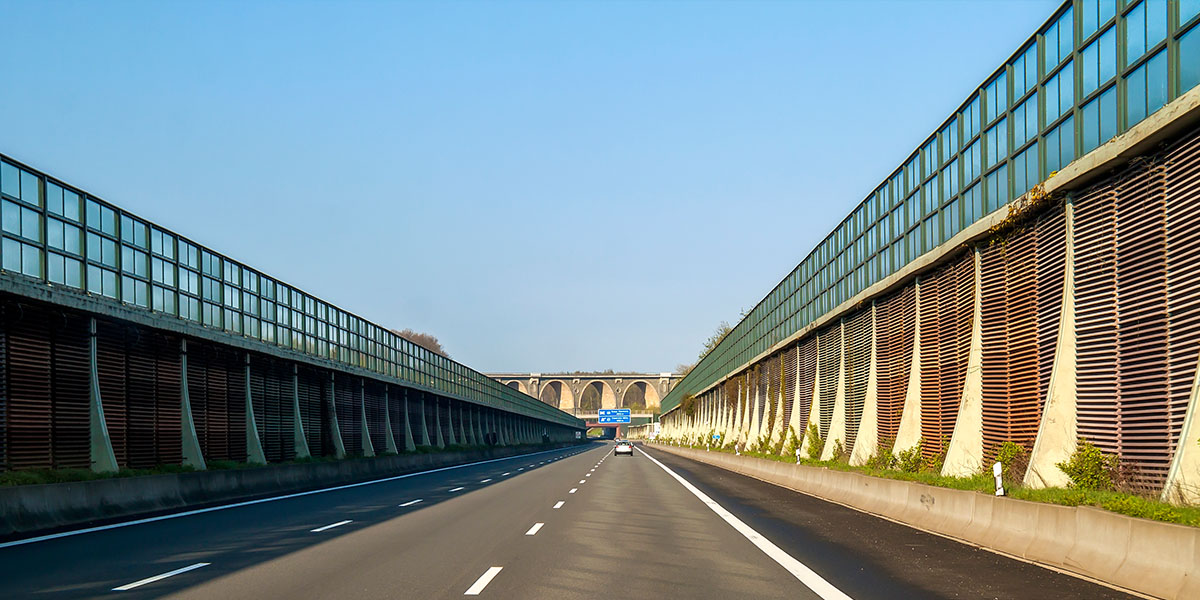
Setting Realistic Expectations for Your Property
Given all of this, here is what we tell clients during an on-site assessment, and what we would encourage you to think about before investing in a sound barrier fence of your own.
If your noise source is steady road traffic and your current fence or boundary does not fully block your sightline to the road, the single highest-impact change is often simply increasing height and eliminating gaps, even before considering a specialized acoustic product. From there, adding a mass-loaded barrier like Acoustifence on top of or in place of a standard fence typically delivers a noticeable, real-world improvement in the 5 to 10 decibel range for most residential road noise situations.
If your noise source is more industrial, lower in frequency, or comes from multiple directions rather than a single line, a rigid panel system like Echotrol, which combines mass with internal sound-absorbing layers, generally performs better than a flexible barrier alone, and the height and placement of the installation become even more important to get right.
If you are dealing with rail noise, which tends to be loud, intermittent, and lower in frequency, expectations should be set carefully. A well-designed barrier will still help, particularly with the higher-frequency components of rail noise, but it is realistic to expect a more modest improvement than with steady traffic noise, and proximity and height matter enormously in these cases.
Why a Site Assessment Matters More Than a Spec Sheet
Every factor described above, line of sight, height, distance, material density, and noise type, is specific to your property and your particular noise source. This is exactly why we do not simply recommend a single acoustic fencing product off a list and call it done. A proper assessment looks at where the noise is actually coming from, what your current sightline situation looks like, what height is realistic and permitted on your property, and what type of noise you are actually dealing with, before recommending a specific product and configuration.
At Raybern Erectors, we partner with Acoustifence and Echotrol specifically because they cover different ends of this performance spectrum, and we will tell you honestly which one fits your situation rather than defaulting to whichever is easiest to install. Every soundproof fence installation we complete is backed by our COR-certified safety standards and a 1-year parts and labor warranty.
Frequently Asked Questions (FAQs)
Related Posts